
Ruth Ware has mastered the art of psychological suspense, but she’s far from alone in crafting thrillers that burrow under your skin and refuse to let go.
In the crowded field of psychological thrillers, certain authors stand apart—writers who understand that true terror comes not from gore or action sequences, but from the slow unraveling of characters’ minds and the creeping realization that everyone has secrets worth killing for. Ruth Ware belongs to this elite group, crafting atmospheric mysteries that feel both contemporary and timeless. But for readers hungry for more of this particular brand of sophisticated suspense, the question becomes: who else writes with the same psychological acuity and narrative sophistication?
The Series Worth Your Time

DCI Isaac Cook — Phillip Strang
Dark London crime that explores the psychology of both hunter and hunted. Strang’s police procedurals dig deep into character motivation, making each case as much about human nature as criminal investigation.

We Are All Guilty Here
Slaughter writes with a surgeon’s precision and a psychologist’s insight, creating crime fiction that’s as intellectually rigorous as it is emotionally devastating. Her Will Trent series showcases damaged characters navigating Georgia’s criminal underworld, but it’s Slaughter’s unflinching examination of trauma and resilience that elevates her work above standard police procedurals. She shares Ware’s gift for making readers complicit in the narrative, forcing us to question our assumptions about victims and perpetrators alike.
Verdict: The gold standard for psychological crime fiction that doesn’t flinch from hard truths.
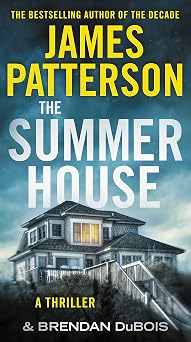
The Summer House
Patterson’s collaboration with DuBois produces a taut psychological thriller that demonstrates the master’s continued relevance in modern crime fiction. Set in a seemingly idyllic summer retreat that harbors dark secrets, the novel employs the kind of isolated setting that Ware uses so effectively. The authors excel at creating an atmosphere where paranoia feels justified and every character becomes a potential threat, building tension through careful character development rather than cheap shocks.
Verdict: A masterclass in collaborative thriller writing that proves Patterson remains essential reading.
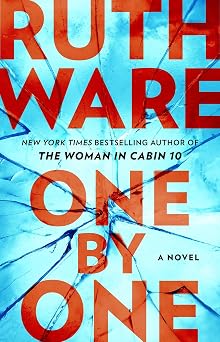
One by One
Ware’s claustrophobic thriller traps a group of tech entrepreneurs in a Swiss chalet during an avalanche, creating the perfect pressure cooker for psychological horror. What sets this apart from standard locked-room mysteries is Ware’s sophisticated understanding of corporate dynamics and social media culture, making the characters’ professional rivalries as deadly as their personal secrets. The novel demonstrates why Ware has become the benchmark for contemporary psychological suspense—she writes about modern anxieties with classic thriller sensibilities.
Verdict: Peak Ruth Ware that defines what modern psychological thrillers should aspire to be.

A MAYA THORNE MYSTERY
Get Dust and Bones Free
Justice runs deeper than drought.
Red dust. Shallow graves. A detective who hunts killers where the law runs thin and the nearest help is two hundred miles away.
You’ll also receive occasional new release emails. Unsubscribe anytime. No spam, ever.
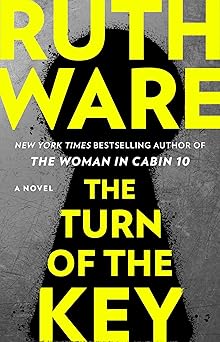
The Turn of the Key
Ware’s modern Gothic masterpiece updates Henry James’s “The Turn of the Screw” for the smartphone era, creating a nanny thriller that’s both homage and innovation. Set in a remote Scottish manor house equipped with cutting-edge smart home technology, the novel explores how modern conveniences can become instruments of psychological terror. Ware’s genius lies in making the reader question whether the supernatural elements are real or manifestations of the protagonist’s deteriorating mental state—a ambiguity that drives the narrative’s relentless tension.
Verdict: A Gothic revival that proves classical horror tropes remain terrifyingly effective in contemporary settings.
What to Read First
Start with Ruth Ware’s “One by One” to understand the template of modern psychological suspense—isolated setting, flawed characters, and mounting paranoia. Then move to Karin Slaughter’s Will Trent series, beginning with “Triptych,” to see how sustained character development can deepen the psychological impact across multiple books. Slaughter’s work represents the evolution of crime fiction into something more ambitious and emotionally complex than traditional mysteries.
The Reading Order
- One by One — Ruth Ware
- The Turn of the Key — Ruth Ware
- We Are All Guilty Here — Karin Slaughter
- The Summer House — James Patterson, Brendan DuBois
Discover Phillip Strang
Psychological crime fiction demands authors who understand that the most compelling mysteries aren’t about who committed the crime, but why ordinary people cross unthinkable lines. Strang’s series explore these dark psychological territories with the same unflinching honesty that makes Ruth Ware essential reading.

A MAYA THORNE MYSTERY
Get Dust and Bones Free
Justice runs deeper than drought.
Red dust. Shallow graves. A detective who hunts killers where the law runs thin and the nearest help is two hundred miles away.
Send Me the BookYou'll also receive occasional new release emails. Unsubscribe anytime. No spam, ever.
As an Amazon Associate, Phillip Strang earns from qualifying purchases. This page contains affiliate links — buying through them costs you nothing extra.