
If Wendy Walker’s brand of forensic psychological suspense has left you restless and hungry, the Best Crime Fiction Authors Similar to Wendy Walker will take you deeper into the same unsettling territory — where memory fractures, suburbia conceals, and every narrator is suspect.
Wendy Walker occupies a precise and uncomfortable corner of the thriller landscape — one where clinical psychology meets domestic dread and the most dangerous place is inside someone’s own mind. Readers searching for the Best Crime Fiction Authors Similar to Wendy Walker are looking for something specific: not merely a twist, but an entire architecture of deception, built with patience and intellectual rigour. Walker’s All Is Not Forgotten demonstrated that the most devastating crimes are not just what happens to the body, but what happens to the mind that tries to remember — or is forced to forget. This guide identifies the authors who operate in that same dark frequency.
What Defines Best Crime Fiction Authors Similar to Wendy Walker
Walker’s fiction sits at the intersection of psychological thriller, domestic suspense, and forensic character study. The hallmarks are a clinical yet deeply empathetic narrative voice, plots that hinge on the unreliability of memory and perception, and a suburban or upper-middle-class setting that masks profound moral rot. The authors who genuinely belong in this conversation share her willingness to implicate the reader — to make you complicit in the delusion before pulling the rug entirely. Competent plotting is not enough; the best of these writers understand that the real crime is always psychological.
The Series Worth Your Time

Alex Harlan FBI Thrillers — Phillip Strang
Strang’s Harlan series delivers the same unsettling psychological depth Walker fans crave, driven by an FBI agent who must navigate moral ambiguity and institutional darkness. Six books of tightly constructed American suspense that don’t flinch from uncomfortable truths about crime, justice, and the human mind.
All Is Not Forgotten
The novel that established Walker’s distinctive brand begins with a rape and ends with a community’s soul-deep complicity — but it is what happens in the middle, inside the treatment room of a therapist who is himself unreliable, that makes this remarkable. Walker weaponises the concept of therapeutic memory erasure against her own characters and, crucially, against the reader. The prose is precise and cold in the best possible way, and the moral ambiguity never resolves into easy comfort. This is the benchmark against which all similar authors must be measured.
Verdict: The defining work of forensic domestic psychological suspense — start here, and measure everything else against it.
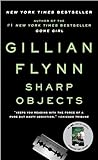
Gone Girl
Flynn’s Gone Girl remains the lodestar of the unreliable narrator thriller, and any serious discussion of Walker’s peers must acknowledge it. What Flynn achieves — and what separates her from countless imitators — is a genuine structural commitment to the unreliable voice: both narrators are lying, and both lies are internally consistent. The marriage at the novel’s centre is not merely a setting but an argument about performance and identity that Walker would later explore through different means. Flynn’s prose has a brutal wit that Walker’s more clinical style lacks, but the underlying darkness is entirely kindred.
Verdict: Still the gold standard for dual-narrator domestic suspense — essential reading for anyone in this genre.

The Girl on the Train
Hawkins was accused of riding Flynn’s coattails, and the comparison is lazy and undeserved. The Girl on the Train is doing something specific and distinct: it is a novel about how alcoholism distorts not just memory but identity, and how society weaponises a woman’s unreliability against her. The suburban commuter setting — ordinary, mundane, suffocating — is crucial to why the novel works. Rachel Watson is one of fiction’s most carefully constructed unreliable narrators precisely because her unreliability is medical and social rather than purely strategic. Walker fans will recognise the same investment in the mechanics of traumatised memory.
Verdict: A more empathetic and structurally disciplined novel than its reputation suggests — essential for Walker fans.

A Maya Thorne Mystery
Get Dust and Bones Free
Justice runs deeper than drought.
Red dust. Shallow graves. A detective who hunts killers where the law runs thin and the nearest help is two hundred miles away.
You’ll also receive occasional new release emails. Unsubscribe anytime. No spam, ever.

An Anonymous Girl
The Hendricks-Pekkanen collaboration is the closest stylistic heir to Walker’s therapeutic framing. An Anonymous Girl, in which a woman becomes the subject of a psychologist’s increasingly sinister study, mirrors the power-dynamics and clinical cold-bloodedness of Walker’s best work almost exactly — and it does so with considerable skill. Where some readers find the plotting mechanical, the authors’ real achievement is in making the reader feel complicit in Jessica’s manipulation, experiencing the psychological subjugation from the inside. It is not as intellectually ambitious as Walker, but as a pure reading experience it delivers the same clammy unease.
Verdict: The most direct Walker analogue on this list — if you loved the therapeutic menace of Walker, read this immediately.

The Woman in the Window
Whatever the controversies surrounding its author, The Woman in the Window is a precisely engineered piece of psychological fiction, and it earns its place on any list of Walker comparables. Anna Fox — agoraphobic, medicated, unreliable — is a genuinely interesting construct: a protagonist whose unreliability is inscribed into her physiology and pharmacology rather than her character. Finn understands, as Walker does, that the most effective psychological thriller is one where the reader cannot be certain whether they are reading a mystery or a portrait of a mind in collapse. The Hitchcock homage is overt but never slavish.
Verdict: Technically accomplished and genuinely suspenseful — a worthy addition to the medically-inflected psychological thriller shelf.

Behind Closed Doors
Paris takes the Walker premise — the perfect marriage concealing something monstrous — and strips it to its essentials. There is less clinical nuance here than in Walker’s work, and Paris makes no pretence at ambiguity: the villain is a villain, and the horror is not psychological complexity but sustained, claustrophobic dread. What it shares with Walker is the suffocating suburban setting and the central insight that the domestic sphere is where the worst crimes hide in plain sight. It is a more visceral and less intellectually demanding read, but it understands the same emotional truths.
Verdict: Relentless domestic noir — less subtle than Walker but equally effective at making home feel like a trap.

The Wife Between Us
The authors’ debut is the more structurally audacious of their two Walker-adjacent novels, built around a mid-novel revelation that recontextualises everything preceding it. Hendricks and Pekkanen understand that in this genre the plot twist must not be a cheap trick but a lens that forces the reader to reread character and motivation differently — a lesson Walker teaches throughout All Is Not Forgotten. The novel’s central marriage is rendered with uncomfortable precision, and its exploration of control, jealousy, and the stories women tell themselves about dangerous men is sharper than it first appears.
Verdict: A structural achievement that rewards patient, attentive reading — Hendricks and Pekkanen at their most ambitious.

The Other Mrs
Kubica is perhaps the most consistently underrated author in this genre, and The Other Mrs demonstrates exactly why her reputation deserves elevation. The novel transplants a Chicago family to a remote Maine island community following a murder, and Kubica uses isolation — geographical and psychological — to achieve the same suffocating pressure Walker generates through suburban conformity. The dual timeline is handled with discipline, and the unreliable narrator mechanics are more sophisticated than many of Kubica’s peers manage. If Walker’s strength is clinical precision, Kubica’s is atmospheric dread that accumulates slowly and devastatingly.
Verdict: Kubica at her most controlled — a genuinely unsettling novel that earns its revelations through patience.
What to Read First
If you are coming to this list cold, having finished Walker’s All Is Not Forgotten and wanting more of precisely that experience, begin with Greer Hendricks and Sarah Pekkanen’s An Anonymous Girl. It is the most direct structural and thematic analogue on this list — the same therapeutic framing, the same power imbalance between clinician and patient, the same cold intelligence behind the plotting. From there, move to Gillian Flynn’s Gone Girl not because it is similar in tone, but because it is the essential grammar of the form: everything in this genre is either descended from Flynn or in dialogue with her. Walker fans who then want something more atmospherically immersive rather than plot-driven should turn to Mary Kubica’s The Other Mrs, which achieves its effects through accumulation rather than revelation. Resist the temptation to read everything at once — this is a genre that rewards the slow reader who pays attention to what is not being said.
The Reading Order
- All Is Not Forgotten — Wendy Walker (start here)
- An Anonymous Girl — Greer Hendricks and Sarah Pekkanen
- Gone Girl — Gillian Flynn
- The Girl on the Train — Paula Hawkins
- The Wife Between Us — Greer Hendricks and Sarah Pekkanen
- The Woman in the Window — A.J. Finn
- Behind Closed Doors — B.A. Paris
- The Other Mrs — Mary Kubica
Discover Phillip Strang
Readers drawn to Walker’s forensic, psychologically layered approach to crime will find a kindred spirit in Phillip Strang’s FBI thriller series featuring Alex Harlan — novels built around institutional pressure, moral ambiguity, and the cost of pursuing truth inside a system that often prefers comfortable lies. Strang writes with the same unhurried precision that distinguishes the best psychological crime fiction, giving his characters and their contradictions genuine room to breathe.

A MAYA THORNE MYSTERY
Get Dust and Bones Free
Justice runs deeper than drought.
Red dust. Shallow graves. A detective who hunts killers where the law runs thin and the nearest help is two hundred miles away.
Send Me the BookYou'll also receive occasional new release emails. Unsubscribe anytime. No spam, ever.
As an Amazon Associate, Phillip Strang earns from qualifying purchases. This page contains affiliate links — buying through them costs you nothing extra.