
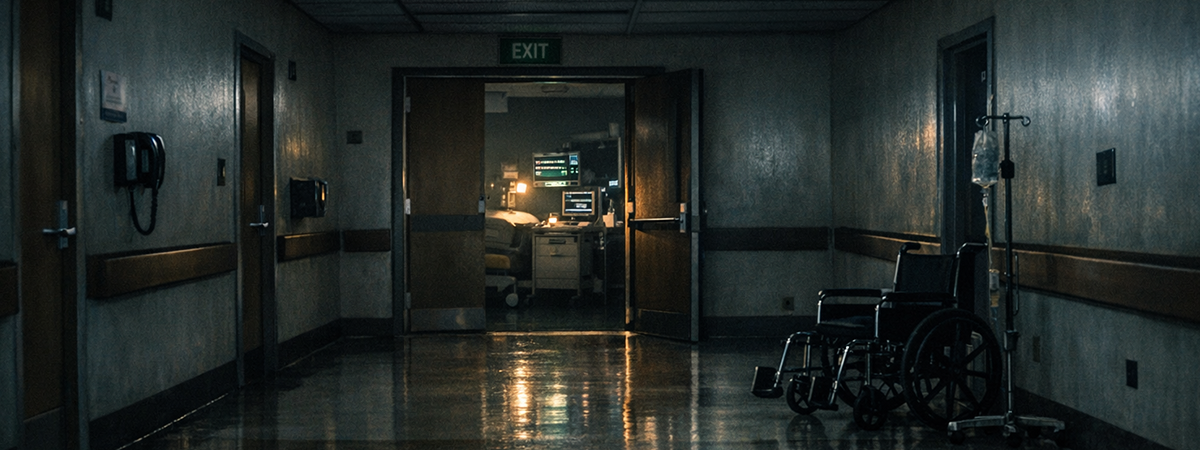
The medical thriller succeeds when it understands that the hospital is not just a setting but a system — one with its own hierarchies, ethical fault lines, and institutional pressures that create the conditions for both heroism and harm. The best entries in this tradition use medical knowledge not as decoration but as the engine of the plot itself.
Medicine makes for unusually rich thriller material because its practitioners already operate in conditions of extreme consequence. The stakes are literal and immediate; the knowledge asymmetry between doctor and patient creates inherent dramatic tension; and the institutional structures of healthcare — with their competing interests of ethics, commerce, and professional survival — generate exactly the kind of pressure that produces both exceptional people and dangerous ones.
The novels below take those pressures seriously. What distinguishes them from generic hospital procedurals is their willingness to use the medical setting to examine something larger: how institutions handle the people they are meant to protect, and what happens when the systems designed to heal become the source of threat.
The Novels Worth Your Time
Freida McFadden — Never Lie, Ward D, Brain Damage, Dead Med
McFadden has become the dominant voice in contemporary medical thriller fiction, producing a sequence of standalones that exploit different corners of the healthcare system with consistent intelligence and genuine clinical knowledge. Never Lie uses psychiatric case files and cassette tapes to unravel a mystery about a psychiatrist whose treatment methods were considerably less ethical than her reputation suggested — the claustrophobic snowbound setting and the gradual revelation of what the tapes contain make it her most unsettling work. Ward D transforms a psychiatric ward into a labyrinthine trap, blurring the boundaries between patients, staff, and visitors with genuine psychological acuity. Brain Damage turns neurological deficit into a plot device — the protagonist investigates her own attempted murder while recovering from a traumatic brain injury that both limits and unexpectedly assists her investigation. Dead Med examines the mental health crisis within medical education itself, using the pressure-cooker environment of medical school as the setting for a thriller where academic stress becomes literally life-threatening. Never Lie to begin. Each standalone works independently.
Gary Gerlacher — AJ Docker (Last Patient of the Night)
Gerlacher, himself an emergency physician, has built one of the most authentically grounded medical thriller series in the genre around AJ Docker — an ER doctor whose commitment to his patients extends well beyond the hospital walls. The series begins when a young woman dies in Docker's ER without identification and his medical ethics compel him to seek justice, drawing him into an investigation that escalates through subsequent novels into corporate healthcare corruption, terrorism response, and small-town criminal conspiracy. What distinguishes the Docker series is its use of clinical observation as investigative method — Docker recognises patterns of injury and illness that reveal darker truths precisely because he is trained to notice what others dismiss. The partnership with his retired police dog Banshee adds both practical investigative capability and emotional texture. Last Patient of the Night to begin. The series develops Docker's world progressively across four novels.

DCI Isaac Cook — Phillip Strang
If you're drawn to medical thrillers for their portrayal of institutional systems that fail the people they are meant to protect — and investigators who must work within those systems to find the truth — the DCI Isaac Cook series belongs on your list. London homicide cases that move from street-level crime into the structures of power, with a detective whose persistence makes him as many enemies inside the institution as outside it. 19 novels.
Browse the Series →D.J. Maughan — Idaho Fall
Maughan's debut takes a genuinely unusual angle on the medical thriller: its protagonist, Rita Burch, is in a medically induced coma following a suspicious fall, and the novel's central conceit is her ability to observe — as an invisible witness — both her own medical treatment and the investigation into what happened to her. The device allows Maughan to explore the ethics of care for unconscious patients from an angle that conventional medical fiction cannot reach, raising questions about what is said and done in the presence of someone assumed not to be present. The neuroscience is handled with care, and the whodunit mechanics are sound. A strong standalone for readers who want their medical thriller with genuine formal invention.
Josie Jade — Montana Memory
Jade's novel approaches the medical thriller from its quieter end — less interested in institutional corruption than in the medical and psychological process of recovery itself. Protagonist Jada wakes with no memory of who she is or how she came to be in a remote Montana setting, and the novel follows her attempts to reconstruct her identity while navigating both the therapeutic environment of the Resting Warrior Ranch and the unknown threats pursuing her. The amnesia and PTSD elements are handled with more clinical accuracy than the genre usually manages, and Jade uses the rural setting — with its limited access to medical care — as a genuine plot constraint rather than mere atmosphere. A standalone for readers who come to the medical thriller for its psychological register rather than its institutional critique.
What Makes Medical Thriller Fiction Work
The medical thriller earns its longevity by exploiting a specific tension that no other thriller subgenre can replicate: the knowledge asymmetry between healthcare provider and patient is structural, not incidental. Patients are by definition vulnerable, often incapacitated, and dependent on the expertise and integrity of people they cannot evaluate independently. When that integrity is compromised — as in McFadden's psychiatric fiction — or when the clinical gaze becomes an investigative tool — as in Gerlacher's Docker series — the genre is working with material that is both genuinely frightening and socially important.
The best entries here are also studies in institutional pressure. McFadden's Dead Med is as much about what medical education does to the people it produces as it is about the thriller plot — and that institutional critique gives it a weight that outlasts the suspense. Gerlacher's Deadly Equation uses corporate healthcare corruption as its conspiracy engine, grounding the thriller in a real-world argument about what profit-driven medicine costs at the clinical level. These are novels that use their genre to say something.
The Ones Worth Knowing About
Several authors sit just outside this list but belong in any serious survey of the genre. Robin Cook essentially invented the modern medical thriller with Coma in 1977 — it remains essential reading for its portrayal of patient vulnerability and institutional indifference to it. Tess Gerritsen, herself a physician, writes the Rizzoli and Isles series which consistently produces some of the most medically grounded crime fiction available — The Surgeon is the entry point. For readers interested in the pharmaceutical conspiracy variant, John Le Carré's The Constant Gardener remains the benchmark.
Where to Start
- Never Lie — Freida McFadden (psychiatric manipulation; the medical thriller at its most psychologically acute)
- Last Patient of the Night — Gary Gerlacher (clinical observation as investigative method; the most authentically grounded series in the genre)
- Brain Damage — Freida McFadden (neurological deficit as plot device; formally inventive)
- Idaho Fall — D.J. Maughan (the comatose witness; a genuinely fresh take on the form)
- Montana Memory — Josie Jade (amnesia and recovery; the medical thriller as psychological study)
If You Enjoy Medical Thrillers — Discover DCI Isaac Cook
Readers drawn to medical thrillers for their portrayal of institutional systems that create the conditions for harm — and investigators who must navigate those systems to find the truth — often find their way to the DCI Isaac Cook series.
Cook is a London homicide detective whose cases consistently expose the gap between how institutions present themselves and what they actually do. Nineteen novels in which the investigation is always about more than the immediate crime, and in which the systems meant to deliver justice are frequently the most interesting obstacle to it.
As an Amazon Associate, Phillip Strang earns from qualifying purchases. This page contains affiliate links — buying through them costs you nothing extra.