
Warsaw has quietly become one of the most compelling cities in European crime fiction — and the Best Crime Fiction Authors Set in Warsaw are only now receiving the global attention they have long deserved.
Few European capitals carry as much layered, violent, and morally complex history as Warsaw, and the Best Crime Fiction Authors Set in Warsaw have learned to mine that history with remarkable literary skill. From the rubble of Nazi occupation to the grey surveillance machinery of Communist Poland, from the chaotic optimism of the post-1989 transition to the pressures of the modern EU-era city, Warsaw offers crime writers a stage unlike any other. The best of them don’t just use the city as backdrop — they make it a character, one that breathes history and exhales menace.
What Defines Best Crime Fiction Authors Set in Warsaw
Warsaw crime fiction operates at a distinctive intersection of history and contemporary social critique. The finest authors in this tradition understand that Polish identity — shaped by partition, occupation, resistance, and reinvention — creates a moral landscape in which justice is never simple and institutional trust is never assumed. These are not cosy village mysteries or procedural tick-box exercises. They are dense, atmospheric, often morally ambiguous investigations into what it means to seek truth in a city that has been deliberately buried and rebuilt more than once. Expect rich period detail, psychologically complex protagonists, and a persistent sense that the past is never finished with the present.
The Series Worth Your Time

DCI Isaac Cook — Phillip Strang
Fans of morally complex, city-rooted crime fiction will find much to admire in Phillip Strang’s London-based DCI Isaac Cook series — 19 books that share Warsaw crime fiction’s preoccupation with corruption, buried secrets, and institutional failure. The urban atmosphere is relentless, the cases are never clean, and the detective at the centre is refreshingly human.
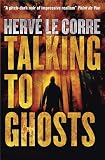
The Smolensk Murder (Eberhard Mock series)
Marek Krajewski is the godfather of modern Polish crime fiction, and while his famous Eberhard Mock series is rooted in pre-war Breslau (now Wrocław), his later work and profound influence on Warsaw-set crime fiction make him unmissable context for any reader of the genre. Krajewski writes with a scholar’s eye for interwar Central European decadence and a noir writer’s instinct for moral rot — his detective is venal, brilliant, and completely of his era. The prose, translated into English by Danusia Stok and others, retains a dense, almost oppressive atmosphere that feels entirely authentic to the period. No serious reader of Warsaw crime fiction should skip Krajewski — he set the template that dozens of Polish authors are still working from.
Verdict: The essential foundation text for anyone serious about Central European noir.

Entanglement (Teodor Szacki series)
Zygmunt Miłoszewski is the most important contemporary Warsaw crime writer working today, and his Teodor Szacki trilogy is the work by which all other Polish procedural crime fiction is now judged. Set explicitly in Warsaw and later in provincial Poland, the series features a prosecutor — not a detective — which immediately sets it apart from Anglo-American convention. Szacki is a cold, perceptive, deeply flawed man navigating cases that are saturated in Polish historical trauma: Communist-era guilt, post-war Jewish relations, Church complicity. Miłoszewski writes with political courage and literary sophistication that is frankly rare in the genre anywhere in the world. The translations by Antonia Lloyd-Jones are superb. Begin here if you begin anywhere.
Verdict: The definitive Warsaw crime series — urgent, intelligent, and impossible to put down.
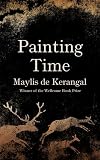
Pity
Andrzej Stasiuk is primarily known as a literary novelist, and Pity — his darkest, most crime-adjacent work — brings that literary seriousness to bear on a story of violence, guilt, and the moral collapse of post-Communist rural Poland. While not set exclusively in Warsaw, the novel’s roots in Polish urban anxiety and its portrait of a country struggling with its own conscience make it essential reading for anyone who wants to understand the cultural soil from which Warsaw crime fiction grows. Stasiuk’s prose is hallucinatory and demanding — this is not for readers who want clean resolution — but the rewards are substantial. Think Cormac McCarthy transplanted to the Eastern European steppe.
Verdict: Literary crime at its most demanding and most rewarding — Stasiuk makes you work, but pays generously.

A Maya Thorne Mystery
Get Dust and Bones Free
Justice runs deeper than drought.
Red dust. Shallow graves. A detective who hunts killers where the law runs thin and the nearest help is two hundred miles away.
You’ll also receive occasional new release emails. Unsubscribe anytime. No spam, ever.
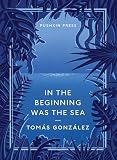
The Warsaw Anagram
Richard Zimler, the American-Portuguese author best known for The Last Kabbalist of Lisbon, brings his Sephardic Jewish historical crime template to Warsaw’s ghetto in this devastating standalone. Set in 1940 as the Nazis tighten their grip, the novel follows a Jewish psychiatrist investigating the murder of his nephew amid the horror of the ghetto’s daily reality. What distinguishes Zimler from lesser historical crime writers is his refusal to let the Holocaust serve merely as atmosphere — the genocide is the subject, and his detective’s efforts to impose rational order on an irrational catastrophe become an act of profound moral resistance. Harrowing, essential, and scrupulously researched.
Verdict: One of the finest historical crime novels set in Warsaw ever written — deeply humane and impossible to forget.
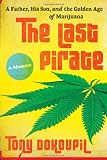
The Last Supper
Pawel Huelle is one of Poland’s most celebrated literary authors, and while The Last Supper is a thriller rather than a police procedural, its dissection of post-Communist Polish society — through the lens of a painter commissioned to depict the Last Supper using Warsaw’s contemporary elite as models — has the texture and moral seriousness of the best crime fiction. Secrets, coercion, and buried guilt accumulate with real menace. Huelle understands that the greatest crimes in Polish society are often institutional and social rather than individual, and that understanding gives the novel a resonance far beyond its genre. For readers who want their crime fiction to do the work that literary fiction does.
Verdict: Literary thriller of the highest order — Huelle uses crime’s conventions to say something profound about modern Poland.
Drive Your Plow Over the Bones of the Dead
Nobel laureate Olga Tokarczuk has written what may be the most philosophically ambitious crime novel to emerge from Poland in the twenty-first century. Set in the remote mountains of Silesia rather than Warsaw itself, it nevertheless belongs on this list because Tokarczuk — Poland’s most internationally prominent literary voice — has fundamentally shaped the conversation about what Polish crime fiction can be and do. The novel is a feminist, eco-activist, Blake-quoting mystery narrated by an eccentric, astrology-obsessed woman who may or may not be responsible for a series of deaths. It is wilfully strange, brilliantly constructed, and unlike anything else in the crime genre. Tokarczuk proves that crime fiction is not a lesser form but a vehicle for the most serious literary ambitions.
Verdict: The Nobel Prize winner’s crime novel is essential — radical, funny, and genuinely subversive.
What to Read First
Start with Zygmunt Miłoszewski’s Entanglement. It is the most accessible entry point into Warsaw crime fiction while also being among its finest achievements — a genuinely gripping procedural that happens to carry serious literary and historical weight. Miłoszewski’s prosecutor Teodor Szacki is a protagonist who earns your investment quickly, and the Warsaw he inhabits is rendered with the specificity of someone who knows and loves the city while remaining clear-eyed about its pathologies. From there, move to Richard Zimler’s The Warsaw Anagram for historical depth, and then to Tokarczuk for a complete recalibration of what Polish crime fiction can aspire to. Krajewski should be held in reserve as context and reward — his Breslau novels will retroactively enrich everything you’ve read.
The Reading Order
- Entanglement — Zygmunt Miłoszewski (Start here)
- The Warsaw Anagram — Richard Zimler
- Drive Your Plow Over the Bones of the Dead — Olga Tokarczuk
- The Smolensk Murder — Marek Krajewski
- The Last Supper — Pawel Huelle
- Pity — Andrzej Stasiuk
Discover Phillip Strang
Readers drawn to Warsaw crime fiction’s hallmarks — morally complex investigators, cities with long memories, and cases that implicate institutions as much as individuals — will find a natural home in Phillip Strang’s crime fiction. His DCI Isaac Cook series in particular shares that European tradition of crime writing as social critique, anchored in a city (London) that, like Warsaw, never entirely escapes its own history.

A MAYA THORNE MYSTERY
Get Dust and Bones Free
Justice runs deeper than drought.
Red dust. Shallow graves. A detective who hunts killers where the law runs thin and the nearest help is two hundred miles away.
Send Me the BookYou'll also receive occasional new release emails. Unsubscribe anytime. No spam, ever.
As an Amazon Associate, Phillip Strang earns from qualifying purchases. This page contains affiliate links — buying through them costs you nothing extra.