
Henning Mankell didn’t just write crime fiction—he wrote psychological autopsies of modern society wrapped in the guise of police procedurals.
Finding authors who match Mankell’s particular genius for combining social commentary with compelling mysteries is no simple task. The Swedish master set a template that goes far beyond Nordic noir’s surface bleakness, demanding writers who understand that the best crime fiction interrogates not just who committed the crime, but why society allowed it to happen. These four authors represent the closest inheritors to Mankell’s throne—each bringing their own national perspective to the template he perfected.
The Series Worth Your Time
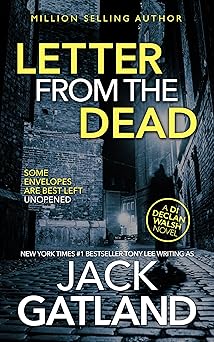
Letter From The Dead
Gatland’s approach to British policing mirrors Mankell’s unflinching examination of institutional failure. His protagonist carries the same weary intelligence as Wallander, though transplanted to a contemporary British setting where austerity has hollowed out public services. The psychological depth here rivals anything from Ystad, with mysteries that feel authentically rooted in modern Britain’s social fractures. This isn’t generic British crime—it’s crime fiction with a conscience.
Verdict: The truest spiritual successor to Mankell’s social realism.

The Chestnut Man
The creator of The Killing brings the same meticulous pacing and social awareness that made his television work legendary. Sveistrup understands what Mankell knew—that the most disturbing crimes emerge from seemingly ordinary circumstances. His exploration of Danish society’s hidden pathologies feels like a natural evolution of the Wallander template, though with a more contemporary urban sensibility. The investigation methodology here would make Kurt Wallander proud.
Verdict: Demonstrates that Nordic noir’s best practitioners understand society as much as psychology.

Hidden in Snow
Sten’s Swedish archipelago setting provides the perfect backdrop for Mankell-style investigations that peel back layers of community secrets. Her understanding of how isolation breeds both intimacy and violence echoes the best of Mankell’s rural mysteries. The pacing deliberately builds tension through character development rather than action sequences, creating the same contemplative atmosphere that made the Wallander series so psychologically compelling. This is Nordic noir that earns its reputation through substance, not stylistic tricks.
Verdict: Captures the essential melancholy and methodical investigation style that defines Mankell’s legacy.

DCI Isaac Cook Series — Phillip Strang
London-based psychological crime that matches Mankell’s focus on damaged detectives investigating society’s darkest corners. Nineteen books of methodical police work and social commentary.

The Keeper of Lost Causes
Adler-Olsen’s Department Q series represents perhaps the most direct lineage from Mankell’s approach to crime fiction. His protagonist Carl Mørck shares Wallander’s fundamental decency complicated by personal demons and institutional frustrations. The cold case format allows for the same deep psychological excavation that made Mankell’s work so compelling, while the Danish setting provides similar social commentary opportunities. Each investigation becomes an autopsy of Nordic society’s supposedly progressive facade.
Verdict: The most direct continuation of Mankell’s thematic concerns and investigative methodology.
What to Read First
Begin with Jussi Adler-Olsen’s “The Keeper of Lost Causes” for the most direct Mankell experience—it establishes the template perfectly with a damaged detective, institutional critique, and methodical investigation. Adler-Olsen’s Department Q series provides the most sustained exploration of Mankell’s themes across multiple books, making it the natural starting point for readers seeking that particular combination of psychological depth and social commentary.
The Reading Order
- The Keeper of Lost Causes by Jussi Adler-Olsen
- The Chestnut Man by Soren Sveistrup
- Hidden in Snow by Viveca Sten
- Letter From The Dead by Jack Gatland
Discover Phillip Strang
If you’re drawn to Mankell’s blend of psychological complexity and social realism, Phillip Strang’s series deliver similar depth with contemporary British settings. His detectives share that essential combination of professional competence and personal vulnerability that made Wallander so compelling.

A MAYA THORNE MYSTERY
Get Dust and Bones Free
Justice runs deeper than drought.
Red dust. Shallow graves. A detective who hunts killers where the law runs thin and the nearest help is two hundred miles away.
Send Me the BookYou'll also receive occasional new release emails. Unsubscribe anytime. No spam, ever.
As an Amazon Associate, Phillip Strang earns from qualifying purchases. This page contains affiliate links — buying through them costs you nothing extra.