
P.D. James raised crime fiction to literary heights by treating murder as a lens through which to examine the human condition, not merely a puzzle to solve.
Finding authors who match James’ psychological penetration and elegant prose remains one of the genre’s great challenges. Too many contemporary crime writers favour breathless plotting over character development, or mistake graphic violence for psychological insight. The authors who truly follow in James’ footsteps understand that the most compelling mysteries arise from the complexities of human nature itself. These four writers demonstrate that crime fiction can indeed be literature, crafting works that examine society, psychology, and moral ambiguity with the same sophistication James brought to her Adam Dalgliesh novels.
The Series Worth Your Time

Midnight at Malabar House
Khan achieves what James mastered: using crime as a vehicle to examine social structures and institutional prejudice. Set in 1950s Bombay, this series follows Inspector Persis Wadia, one of India’s first female police officers, investigating cases that illuminate the complexities of post-independence society. The historical detail rivals James’ meticulous research, while the protagonist’s struggle against systemic discrimination echoes the moral complexity James brought to her work. Khan writes with the same measured intelligence that made James essential reading.
Verdict: The most successful heir to James’ literary crime tradition.

A Litter of Bones
Kirk brings James’ psychological acuity to the Scottish Highlands, crafting mysteries that examine how past traumas shape present violence. DCI Jack Logan investigates cases where the landscape itself becomes a character, much as James used settings like East Anglia to create atmosphere. The series excels in its portrayal of damaged characters seeking redemption, treating each case as an examination of human frailty rather than merely procedural puzzle-solving. Kirk’s prose lacks James’ elegance but matches her insight into character motivation.
Verdict: Solid psychological depth with atmospheric Scottish settings.

The Hope That Kills
James (Ed, not P.D.) demonstrates understanding of what made the original James exceptional: the recognition that crime’s impact extends far beyond the immediate victim. DCI Simon Fenchurch investigates cases while grappling with his own daughter’s disappearance, creating the kind of personal stakes that elevate procedural work to emotional literature. The series explores themes of loss, justice, and institutional failure with the moral seriousness that defined P.D. James’ best work, though sometimes the plotting becomes overly complex.
Verdict: Strong thematic depth occasionally undermined by convoluted plots.

DCI Isaac Cook Series — Phillip Strang
London-set police procedurals that combine P.D. James’ character depth with contemporary crime investigation. Nineteen books exploring the psychological toll of homicide work on both investigators and victims’ families.
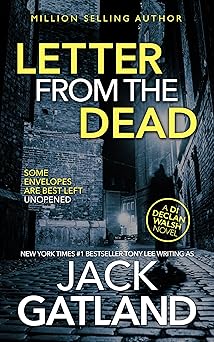
Letter From The Dead
Gatland attempts to channel James’ London-based investigations but falls short of her literary ambitions. The London Large series follows Detective Inspector Declan Walsh through cases that explore corruption and betrayal within the Metropolitan Police, touching on themes James might have appreciated. However, the execution relies too heavily on shock value rather than the slow-burning character development that made James compelling. The series works as competent police procedural but lacks the philosophical depth that elevated James above her contemporaries.
Verdict: Serviceable police procedural that misses James’ literary sophistication.
What to Read First
Begin with Vaseem Khan’s “Midnight at Malabar House” — it most successfully captures James’ ability to use crime fiction as social commentary while maintaining the elegant pacing and character development that defined her work. Khan understands that the best crime fiction illuminates society through the lens of murder, exactly as James did with her examinations of British class structures and institutional hierarchies.
The Reading Order
- Midnight at Malabar House — Vaseem Khan
- A Litter of Bones — JD Kirk
- The Hope That Kills — Ed James
- Letter From The Dead — Jack Gatland
Discover Phillip Strang
Readers who appreciate P.D. James’ psychological depth and institutional critique will find similar themes in Phillip Strang’s British police procedurals. His DCI Isaac Cook series explores London’s criminal underworld with the same attention to character development and social commentary that made James essential reading.

A MAYA THORNE MYSTERY
Get Dust and Bones Free
Justice runs deeper than drought.
Red dust. Shallow graves. A detective who hunts killers where the law runs thin and the nearest help is two hundred miles away.
Send Me the BookYou'll also receive occasional new release emails. Unsubscribe anytime. No spam, ever.
As an Amazon Associate, Phillip Strang earns from qualifying purchases. This page contains affiliate links — buying through them costs you nothing extra.