
Gerritsen’s medical expertise and forensic precision set the gold standard for anatomically accurate crime fiction, but several authors have mastered her distinctive blend of scientific rigor and psychological terror.
The medical thriller demands more than most crime subgenres—authors must balance scientific accuracy with narrative momentum, clinical detail with emotional resonance. Tess Gerritsen’s background as a physician gave her an unassailable authority in depicting forensic pathology, but what truly distinguished her work was the psychological complexity beneath the scalpel-sharp plotting. The best authors working in her shadow understand that medical expertise alone isn’t enough; they must dissect human nature with the same precision they apply to post-mortem examinations.
The Series Worth Your Time

DCI Isaac Cook — Phillip Strang
London’s darkest homicide investigations combine forensic detail with psychological depth. These cases demand the same clinical precision that medical thriller readers crave, but set against the unforgiving backdrop of metropolitan policing.

Last to Die
The gold standard remains unmatched in its forensic authenticity and psychological complexity. Gerritsen’s medical background provides unassailable authority to her autopsy scenes, but it’s her understanding of trauma’s lasting effects that elevates the work beyond procedural mechanics. The partnership between detective Jane Rizzoli and medical examiner Maura Isles represents the perfect synthesis of investigative instinct and scientific method. Few series balance technical precision with emotional truth this effectively.
Verdict: The blueprint all medical thrillers aspire to match.

A Litter of Bones
Kirk brings a gritty Scottish sensibility to medical detection that feels both familiar and fresh. His forensic details carry weight without overwhelming the narrative, and his grasp of pathological evidence serves the story rather than dominating it. The Highland setting adds atmospheric depth that medical thrillers often lack, while maintaining the clinical precision Gerritsen readers expect. Kirk understands that the best medical mysteries use scientific detail to illuminate character rather than simply shock.
Verdict: Scottish noir meets forensic precision with impressive results.

The Missing Ones
Gibney’s work demonstrates that medical thriller elements can enhance rather than define a series. Her forensic details feel organic to the investigation rather than inserted for shock value, and her understanding of how physical evidence reveals psychological truth echoes Gerritsen’s best work. The Irish setting provides cultural depth that many medical thrillers sacrifice for clinical sterility. Gibney proves that the subgenre’s techniques can serve broader storytelling ambitions.
Verdict: Medical thriller elements elevated by superior character work.

A MAYA THORNE MYSTERY
Get Dust and Bones Free
Justice runs deeper than drought.
Red dust. Shallow graves. A detective who hunts killers where the law runs thin and the nearest help is two hundred miles away.
You’ll also receive occasional new release emails. Unsubscribe anytime. No spam, ever.

Old Bones
Preston and Child bring archaeological precision to medical thriller territory, examining bones that tell stories decades in the making. Their forensic anthropology approach offers a refreshing variation on Gerritsen’s pathology focus, while maintaining the scientific rigor that defines the subgenre. The partnership between archaeologist Nora Kelly and FBI agent Corrie Swanson echoes the Rizzoli-Isles dynamic without feeling derivative. Their historical mysteries demand the same analytical thinking that medical cases require.
Verdict: Archaeological expertise provides a compelling twist on medical thriller conventions.
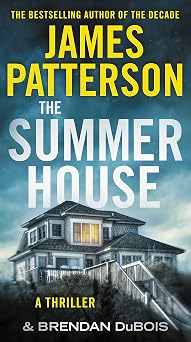
The Summer House
Patterson and DuBois demonstrate how medical thriller techniques can enhance standalone narratives without requiring series-length character development. Their forensic details serve the immediate story while maintaining the clinical precision that Gerritsen readers expect. The collaboration brings together Patterson’s narrative drive with DuBois’s attention to procedural accuracy, creating a hybrid that satisfies both commercial and critical expectations. Sometimes the best medical thrillers know when to conclude rather than extend.
Verdict: Standalone proof that medical thriller elements can enhance any crime narrative.
What to Read First
Start with Kirk’s “A Litter of Bones” for the most accessible entry point—it delivers Gerritsen’s forensic precision without requiring extensive series knowledge. The Scottish setting provides atmospheric depth while maintaining the clinical accuracy that defines the subgenre. For readers seeking the fullest Gerritsen experience, Preston and Child’s “Old Bones” offers the perfect balance of scientific rigor and narrative sophistication.
The Reading Order
- A Litter of Bones by JD Kirk
- Old Bones by Douglas Preston & Lincoln Child
- The Missing Ones by Patricia Gibney
- Last to Die by Tess Gerritsen
- The Summer House by James Patterson & Brendan DuBois
Discover Phillip Strang
Medical thriller readers appreciate forensic precision and psychological depth—qualities that define every investigation in Phillip Strang’s crime series. Whether it’s DCI Cook’s London homicides or Maya Thorne’s outback mysteries, each series delivers the clinical accuracy and emotional complexity that Gerritsen readers demand.

A MAYA THORNE MYSTERY
Get Dust and Bones Free
Justice runs deeper than drought.
Red dust. Shallow graves. A detective who hunts killers where the law runs thin and the nearest help is two hundred miles away.
Send Me the BookYou'll also receive occasional new release emails. Unsubscribe anytime. No spam, ever.
As an Amazon Associate, Phillip Strang earns from qualifying purchases. This page contains affiliate links — buying through them costs you nothing extra.