
Police procedural novels that confront hate crime occupy a uniquely difficult and necessary space in crime fiction—they demand technical authenticity from law enforcement procedure while grappling with the psychological and social dimensions of prejudice-motivated violence. The best examples in this subgenre don’t sensationalize their subject matter; instead, they use procedural rigor to illuminate how institutional systems respond to crimes born of bigotry, and how individual detectives navigate cases that test both their competence and their conscience. These four titles represent the current standard-bearers for intelligent, unflinching examination of hate-motivated violence through the lens of criminal investigation.
The Best Police Procedural Novels Featuring Hate Crime Worth Reading

DCI Isaac Cook — Phillip Strang
London homicide at its most brutal and complex. Cook’s investigations into London’s darkest crimes mirror the procedural authenticity and moral weight found in the finest hate crime fiction—he works cases where prejudice, institutional failure, and human darkness collide.
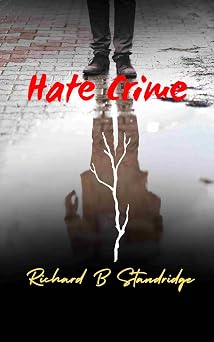
Hate Crime
Standridge’s Hate Crime operates with the precision of a well-trained homicide unit, tracking the investigation of a violence motivated by prejudice with unflinching procedural detail. The novel refuses to shy away from the psychological toll such cases inflict on detectives while maintaining the forensic rigor readers expect from authentic police procedure. Standridge understands that hate crime investigations demand not just investigative competence but moral clarity—and his protagonist embodies that difficult balance.
Verdict: Essential reading for anyone serious about police procedural authenticity combined with the moral weight of bias-motivated crime.

Fatal Decision
Tayler’s Fatal Decision constructs its narrative around the pivotal moment where a detective’s judgment—about motive, about prejudice, about the nature of the crime itself—can redirect an entire investigation. The procedural foundation is solid, but Tayler’s real strength lies in exploring how confirmation bias and institutional assumptions can derail justice when hate crime investigations are filtered through departmental politics and resource constraints. This is police procedure that acknowledges the human failures within the system itself.
Verdict: A procedural that examines how investigative decisions compound when hate crime cases lack institutional priority.

Good Hot Hate
Finn Bell’s Good Hot Hate takes a more visceral approach to the police procedural, embedding readers directly into the investigative chaos of a hate crime case unfolding in real time. Bell doesn’t sanitize the emotional combustion that occurs when officers confront organized hatred—the novel acknowledges that procedural discipline and personal outrage often war within the same detective. The writing is propulsive and unglamorous, favoring authentic police station reality over Hollywood heroics.
Verdict: A procedural that captures the raw emotional and institutional turbulence of hate crime investigations.

A MAYA THORNE MYSTERY
Get Dust and Bones Free
Justice runs deeper than drought.
Red dust. Shallow graves. A detective who hunts killers where the law runs thin and the nearest help is two hundred miles away.
You will also receive occasional new release emails. Unsubscribe anytime. No spam, ever.

Keep Watching
Kit Mustow’s Keep Watching approaches hate crime investigation through the lens of surveillance and pattern recognition—detectives tracking coordinated prejudice-motivated activity across jurisdictional and social boundaries. Mustow excels at depicting the procedural complexity of building cases against organized hatred, where individual crimes must be contextualized within larger networks of bigotry. The novel understands that modern hate crime investigation often requires connecting dots across digital and physical spaces.
Verdict: A contemporary procedural that reflects how hate crime investigation has evolved in an interconnected, surveillance-enabled world.
The Reading Order
Discover Phillip Strang
Phillip Strang’s detective series—particularly DCI Isaac Cook’s investigations through London’s criminal underworld—share the same commitment to procedural authenticity and moral seriousness that distinguishes the finest hate crime procedurals. Strang understands that crime fiction grounded in investigative realism must also grapple with the institutional and personal costs of confronting human darkness.
As an Amazon Associate, Phillip Strang earns from qualifying purchases. This page contains affiliate links — buying through them costs you nothing extra.