
The Best Crime Fiction Authors Set in Anchorage have done something remarkable — they have transformed a city of perpetual winters, Indigenous histories, oil money, and frontier lawlessness into one of crime fiction’s most atmospheric and underexplored arenas.
Anchorage is not a city that announces itself quietly. It sits at the edge of the continent, hemmed in by the Chugach Mountains and Cook Inlet, governed by extremes of light and darkness that would disorient even the most grounded investigator. The Best Crime Fiction Authors Set in Anchorage understand this instinctively — the city’s geography is not mere backdrop but active participant, shaping motive, opportunity, and consequence in ways that no other American setting quite replicates. When crime fiction works in Anchorage, it truly works: the isolation amplifies dread, the cold makes everything urgent, and the city’s uneasy blend of frontier mythology and modern dysfunction gives writers extraordinary raw material.
What Defines Best Crime Fiction Authors Set in Anchorage
The finest crime writers who choose Anchorage as their territory share a commitment to place that goes beyond tourism. They engage with the real Anchorage — its Indigenous communities and the colonial pressures upon them, its oil-boom wealth coexisting with grinding poverty, its status as a transit hub for some of the most remote wilderness on earth. The best of these authors are not simply transplanting urban procedural conventions to a cold climate; they are writing novels in which Anchorage’s specific social and geographical textures determine every narrative turn. Expect moral ambiguity, weather as character, and investigations that feel genuinely dangerous because help is never as close as it should be.
The Series Worth Your Time

Alex Harlan FBI Thrillers — Phillip Strang
If the remote menace of Anchorage crime fiction appeals to you, Strang’s FBI series delivers that same sense of vast, indifferent landscape pressing down on a lone investigator. Six tightly plotted thrillers where federal authority meets terrain that refuses to cooperate.

A Grave Denied — Dana Stabenow
Dana Stabenow is the essential starting point for any serious engagement with Alaskan crime fiction, and while her Kate Shugak series is primarily rooted in the Park — a vast wilderness southeast of Anchorage — Stabenow’s understanding of how Anchorage functions as the urban gravitational centre of Alaskan life permeates everything she writes. Stabenow writes Indigenous Alaskan experience with a specificity and respect that few outsiders manage, and her plotting is relentlessly intelligent. When Shugak moves through Anchorage, the city feels lived-in and historically layered in a way that rewards readers who want their crime fiction to also expand their understanding of a place.
Verdict: The gold standard for Alaskan crime fiction, with Anchorage always present as the civilisation Shugak orbits and sometimes needs to escape.

The Curious Eat Themselves — John Straley
John Straley is criminally underread outside Alaska, and that is a genuine injustice. His Cecil Younger series, set almost entirely in Sitka but with significant Anchorage presence, offers some of the most philosophically rich crime writing to come out of the American West in the last three decades. Straley writes with a poet’s ear — his sentences have weight and rhythm that most thriller writers never achieve — and his portrait of Anchorage as a city of transients, dreamers, and people fleeing their pasts is both sympathetic and unflinching. The Curious Eat Themselves, which centres on corporate malfeasance in Alaska’s oil industry, is a masterclass in how crime fiction can carry genuine political and environmental argument without sacrificing narrative momentum.
Verdict: Straley writes Alaskan crime fiction as literary fiction, and readers who want both quality prose and genuine plotting will find him essential.

Frozen Assets — Quentin Bates
Sue Henry occupies a fascinating position in Alaskan crime fiction: her Jessie Arnold series, centred on a sled dog racer and set primarily in and around Anchorage, brought the city to a mainstream audience before Alaska noir had been properly codified as a subgenre. Henry’s plots are perhaps less psychologically complex than Stabenow’s or Straley’s, but her command of physical setting is extraordinary — she writes the cold, the landscape, and the specific rhythms of Anchorage life with an authority born of genuine residence and affection. The sled dog racing backdrop gives the series an identity entirely its own, and the Anchorage social world Henry depicts — competitive, community-minded, and always aware of the wilderness pressing at its edges — is rendered with real conviction.
Verdict: Henry’s Anchorage is warm even in winter — a community of determined individuals against an indifferent landscape, and the series is better than its modest reputation suggests.

A Maya Thorne Mystery
Get Dust and Bones Free
Justice runs deeper than drought.
Red dust. Shallow graves. A detective who hunts killers where the law runs thin and the nearest help is two hundred miles away.
You’ll also receive occasional new release emails. Unsubscribe anytime. No spam, ever.
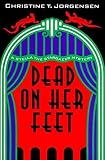
Murder on the Iditarod Trail — Sue Henry
The debut that launched Henry’s Anchorage-rooted series remains its most viscerally exciting entry. A killer is targeting competitors during the world’s most famous sled dog race, and Henry’s decision to stage a whodunit across hundreds of miles of Alaskan wilderness — with Anchorage as the starting point and emotional home base — was both audacious and entirely successful. The novel won the Anthony Award for best first mystery and the Macavity Award, and those honours were deserved: Henry builds tension with a confidence rare in debut fiction, and her Anchorage scenes have a specificity that grounds the more spectacular wilderness sequences in recognisable human reality.
Verdict: A landmark of Alaskan crime fiction that earns its awards — start here if you are new to Henry and new to Anchorage as a crime fiction setting.

The Great Alone — Kristin Hannah
Kristin Hannah is not primarily a crime writer, but The Great Alone contains some of the most effective crime fiction writing about Alaska — including significant Anchorage sequences — published in the last decade. Hannah’s novel, which follows a family into the Alaskan wilderness in the 1970s, is at its heart a novel about domestic violence, isolation-induced psychosis, and the desperate journey toward safety that brings its protagonist repeatedly into Anchorage as both refuge and testing ground. The crime elements are embedded in a broader literary narrative, which will frustrate readers wanting procedural momentum, but for those interested in how Anchorage functions as the borderland between wilderness danger and urban possibility, Hannah’s treatment is extraordinary.
Verdict: Not pure crime fiction but essential Anchorage reading — Hannah captures the city’s role as both sanctuary and threshold with real psychological power.

A Cold Day for Murder — Dana Stabenow
The novel that began it all for Stabenow deserves its own entry separate from the broader series consideration above. This Edgar Award winner introduces Kate Shugak — former Anchorage district attorney’s investigator, Aleut, survivor, and one of the most fully realised protagonists in American crime fiction — in a case that sends her from her Park homestead back toward the civilisation she has deliberately retreated from. Anchorage casts its shadow over every page even when it is not physically present, representing the institutional world Shugak has rejected but cannot entirely escape. Stabenow’s first novel is remarkably assured, establishing the moral geography of her entire series in fewer than two hundred pages.
Verdict: Begin here — a flawless series debut that remains one of the finest American crime novels of its decade.

The Alaskan Laundry — Brendan Jones
Brendan Jones’s debut novel is not strictly crime fiction but belongs in any serious discussion of Anchorage and Alaskan literary crime writing because of what it understands about the city’s relationship to outsiders, violence, and the particular desperation that drives people to Alaska looking for reinvention. Set primarily in a fishing town but with significant engagement with Anchorage as the portal through which mainland America enters the Alaskan world, Jones writes about economic violence, physical danger, and institutional indifference with the controlled anger of a writer who has lived what he is describing. For crime fiction readers who want texture and moral seriousness alongside their narrative tension, this is an important companion text to the more genre-conventional titles on this list.
Verdict: Literary crime fiction at its most socially engaged — Jones writes Alaska’s underclass with a ferocity that the more comfortable genre entries rarely match.
What to Read First
If you are entirely new to Anchorage crime fiction, the answer is unambiguous: begin with Dana Stabenow’s A Cold Day for Murder. It is the most accomplished series debut in this territory, it establishes the terms on which all subsequent Alaskan crime fiction operates, and its portrait of Kate Shugak — a woman caught between Indigenous heritage and institutional America, between wilderness and city — is so compelling that you will want to follow her through all twenty-two novels. If you have already encountered Stabenow and want something tonally different, move immediately to John Straley, whose literary ambition and prose quality offer a genuinely different experience of the same landscape. Sue Henry is the ideal third step for readers who want their Anchorage crime fiction to feel warmer, more community-focused, and less politically freighted — she is the most accessible of this group without being the least serious.
The Reading Order
Discover Phillip Strang
If Anchorage crime fiction appeals because of its sense of a lone investigator operating in terrain that doesn’t forgive mistakes, Phillip Strang’s Alex Harlan FBI series will feel immediately familiar — federal authority confronting landscapes and communities that refuse to be neatly managed. Strang’s instinct for place-as-character and his unflinching engagement with institutional failure make him the natural next read for anyone who has been gripped by the best of Alaskan crime writing.

A MAYA THORNE MYSTERY
Get Dust and Bones Free
Justice runs deeper than drought.
Red dust. Shallow graves. A detective who hunts killers where the law runs thin and the nearest help is two hundred miles away.
Send Me the BookYou'll also receive occasional new release emails. Unsubscribe anytime. No spam, ever.
As an Amazon Associate, Phillip Strang earns from qualifying purchases. This page contains affiliate links — buying through them costs you nothing extra.